
Puebla: On the Happiness That Wants to Be Found!
Updated: Jun 9
In Germany and elsewhere,
I often move behind a wall of glass.
I see people, but I can't reach them.
I hear people, but I don't understand them.
I touch people, but they feel nothing.
bernd
2024/2026
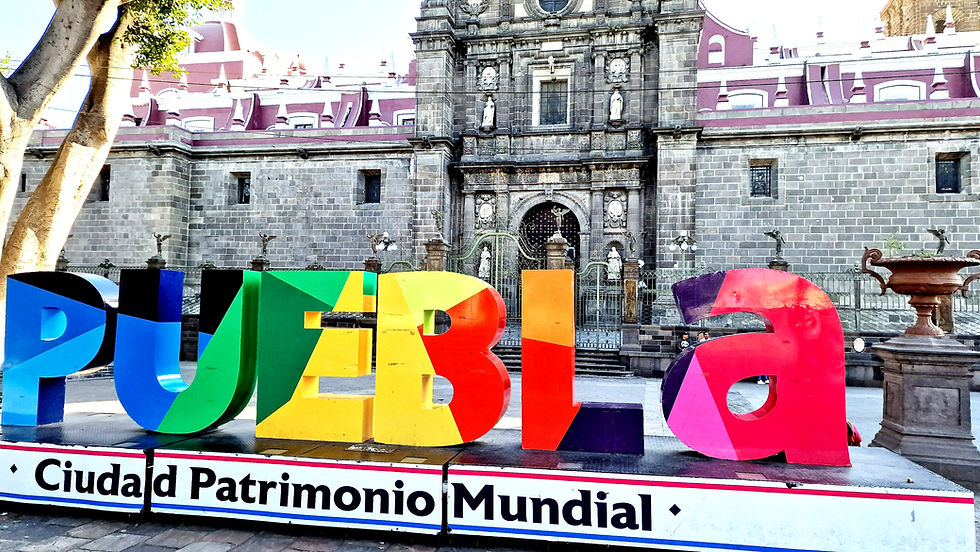
An Attempt
Moments of happiness are usually brief. They are found in a song that suddenly makes everything feel lighter, in a message that arrives at just the right time, or in that one specific moment when everything simply feels right. Happiness is not always loud. Sometimes, it is merely a brief, fleeting moment — one that stays with you.

Sometimes, when I travel, I am simultaneously bombarded by a flood of impressions.
I stare in open-mouthed wonder at the zest for life people radiate—enveloped by colors and scents, intoxicated by the noise and light.
Then I realize: This is impossible to put into words. Especially not in a travel blog, where—amidst the almost obscene overload of media that numbs our independent thinking—any word is one too many.
This was one such trip.
Travel
After my spell of isolation during the group tour of Mexico—and subsequently amidst the restless din of Playa del Carmen — I flee to Puebla (https://www.skybirdfly.blog/en/post/group-travel). The flight is quickly booked and passes swiftly. And then, my first surprise awaits: the hotel. It stands as a statement against the overblown hotel monoliths of mass tourism found in Playa del Carmen. The hotel’s name is a tongue-twister:
Collection O Al otro lado del rio
My rating: *****

Adresse: 1, Calle 3 Ote, 1030, Barrio de Analco, 72000 Heroica Puebla de Zaragoza, Pue, Mexico
Telefon: +52 222 690 3358
The hotel is located just about 500 meters from Puebla’s Old Town. Don’t let the unassuming entrance fool you.
It is an oasis for the soul and the eyes, and it houses a first-class restaurant that is also popular with locals. It is almost always fully booked on weekends, with guests queuing all the way out into the courtyard.

Tiles and Churches
Founded in 1531, Puebla lies approximately 100 km east of Mexico City, at the foot of the Popocatépetl volcano. Its bustling historic old town is a UNESCO World Heritage site. Like a vast open-air museum, the historic center shines with countless scenes that look just like vintage postcards.
Puebla is a cultural feast for all the senses: The baroque old town enchants me with its colorful buildings bathed in paint and glazed azulejo tiles that adorn the facades, churches and courtyards. Spanish colonial architecture is nearly omnipresent, yet it is the indigenous heritage that truly brings concepts like culinary culture, daily rituals, and craftsmanship to life.

In Search of Happiness
In the course of my search, I pass by a food stall. The air smells of Chiles en Nogada, a traditional Mexican dish consisting of stuffed poblano peppers with walnut sauce and pomegranate seeds. Due to its symbolism and color, the dish is considered the Mexican national dish. In Germany, we have a saying: the way to a person's heart is through their stomach. A lovely thought, I think. According to this, love is omnipresent in Mexico - with all the fresh and delicious food on offer.
But love and happiness are tricky things. Sometimes they complement each other; at other times, they are mutually exclusive.

Against the Manufacture of Empty Phrases
There is no doubt: we are surrounded by advisors, assistants, media professionals, consulting firms, coaches, and lawyers who amputate all our intuitive impulses and social skills: "You can't say that." "You aren't allowed to do that." "That's dangerous." "That will ruin your poll numbers..."

What a joy art and craftsmanship are! Non-verbal communication with my senses. It makes you happy. Simple, uncomplicated, and free. All it takes is sensitivity. The colors act as an amplifier for me.

A practical example is the artisan shops with their Talavera ceramics, regardless of whether one likes them or not. This ceramic is well-known far beyond Mexico and still shapes the cityscape today: plates, vases, or fountains.
Production is complex and risky, as a piece can break at any time. Only natural clay is used in the manufacturing process—without chemical additives or dyes. Even on rainy days, they enliven the cityscape.

Musical Letters
I continue my walk through Puebla’s pedestrian zone, listening to the sounds of a street musician—a common sight here. How I envy his love for music. How soothing it is for one's soul to be able to play an instrument and share it with others, eliciting emotions from them, releasing feelings long thought lost, and – at least for a moment – giving other people moments of acoustic happiness.
Puebla Cathedral: A Cathedral in the Light
Adresse: C. 16 de Septiembre s/n
Centro histórico de Puebla, 72000 Heroica Puebla de Zaragoza
Dusk is already falling. The day is drawing to an atmospheric close, slowly drawing people out onto the streets as temperatures become more bearable. I arrive at the cathedral on the Zócalo, where a unique visual and acoustic spectacle catches my eye. See for yourselves:
Puebla Cathedral is a world-famous masterpiece of the Spanish Renaissance and Baroque styles. Its lengthy construction began in 1575 and continued until its final completion in 1690. The monumental edifice shines with its two massive bell towers and a magnificent dome.

Families enjoy the atmospheric evening against this historic backdrop in the square outside, accompanied by their energetic children, who are playing tag boisterously and noisily.
To them, their parents are still beacons of knowledge and strength.
For a moment, a blink of an eye in her lifetime, life itself is perfect. Perhaps even complete, in a way it will never be again.
Like for me, just in this moment.
Sadomasochistic preferences
Suffering plays a central role in Christian mythology. In my childhood, "dear God" was always a punishing God, and religious life was always characterized by suffering and focused on salvation through Jesus Christ, whose life ended cruelly. Is his self-sacrifice, his suffering, our happiness?
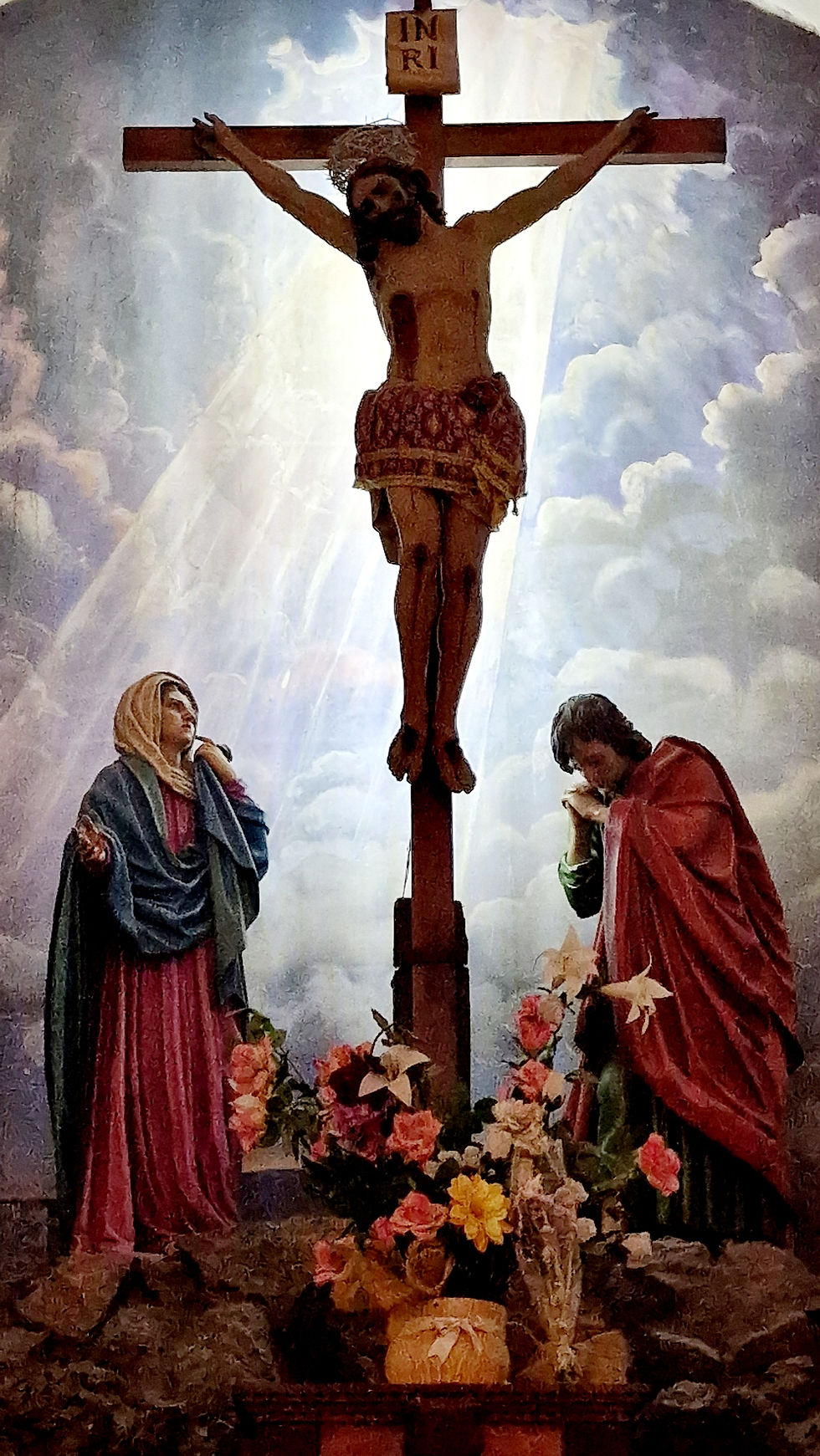
These depictions of his suffering—aiming for the utmost realism—border on the tasteless, verging on the horror of the sadomasochistic religious fixation on the suffering and death of the Redeemer—a fixation that missionaries, in defiance of all Christian values, were later all too eager to inflict upon other peoples, just as almost all world religions have done.

In Puebla, religion is part of public life. This is evident at first glance at the magnificent interior of the massive cathedral. Numerous churches, monasteries, and religious structures shape the cityscape.

In Puebla—as throughout Mexico—religion is practiced through countless religious rituals, ceremonies, processions, patron saint festivals, and commemorations featuring food, music, and flowers. For travelers like me, it's very impressive to see, because religion is practiced here less anonymously than at home. It is visible, audible, and at times, even edible.
The Secrets of Puebla: Time and Space
Adresse: C. 2-A Nte. 2602A, Barrio de Xanenetla, 72990 Puebla
Opening hours: Tuesday – Sunday from 10 a.m. to 4 p.m.
Admission price: regular €1.60, reduced €0.70, children up to 12 years free of charge
Insights and discoveries from archaeology – sunken kingdoms, ruins, jewelry, weapons, everyday objects, graves – bear witness and reflect our transience. I see historical sites as a kind of umbilical cord that leads us back to our past, to our roots. Like here in the Secrets of Puebla Museum (Los Secretos de Puebla).
The tunnel systems beneath the city of Puebla were only discovered during construction work in 2015. They were built across different eras over a period of 500 years.
In the restored tunnel, you walk through stone passageways and historic tunnel sections. In the exhibitions, archaeologists unearthed numerous artifacts, such as antique toys, kitchen utensils, rifles, and bullets.

This tunnel system had various functions:
Military-strategic defense function: The passages connect the city center with the Fuerte de Loreto fortress. During the 1862 Battle of Puebla against the French, the Mexicans were able to move troops and ammunition undetected, which ultimately led to victory.
Spanish colonial authorities built drainage systems during the 16th and 17th centuries.
The tunnels link various churches and monasteries.
Transport of goods and smuggling: The main tunnels are high and wide enough to transport goods by horse.
Mercado de la Victoria
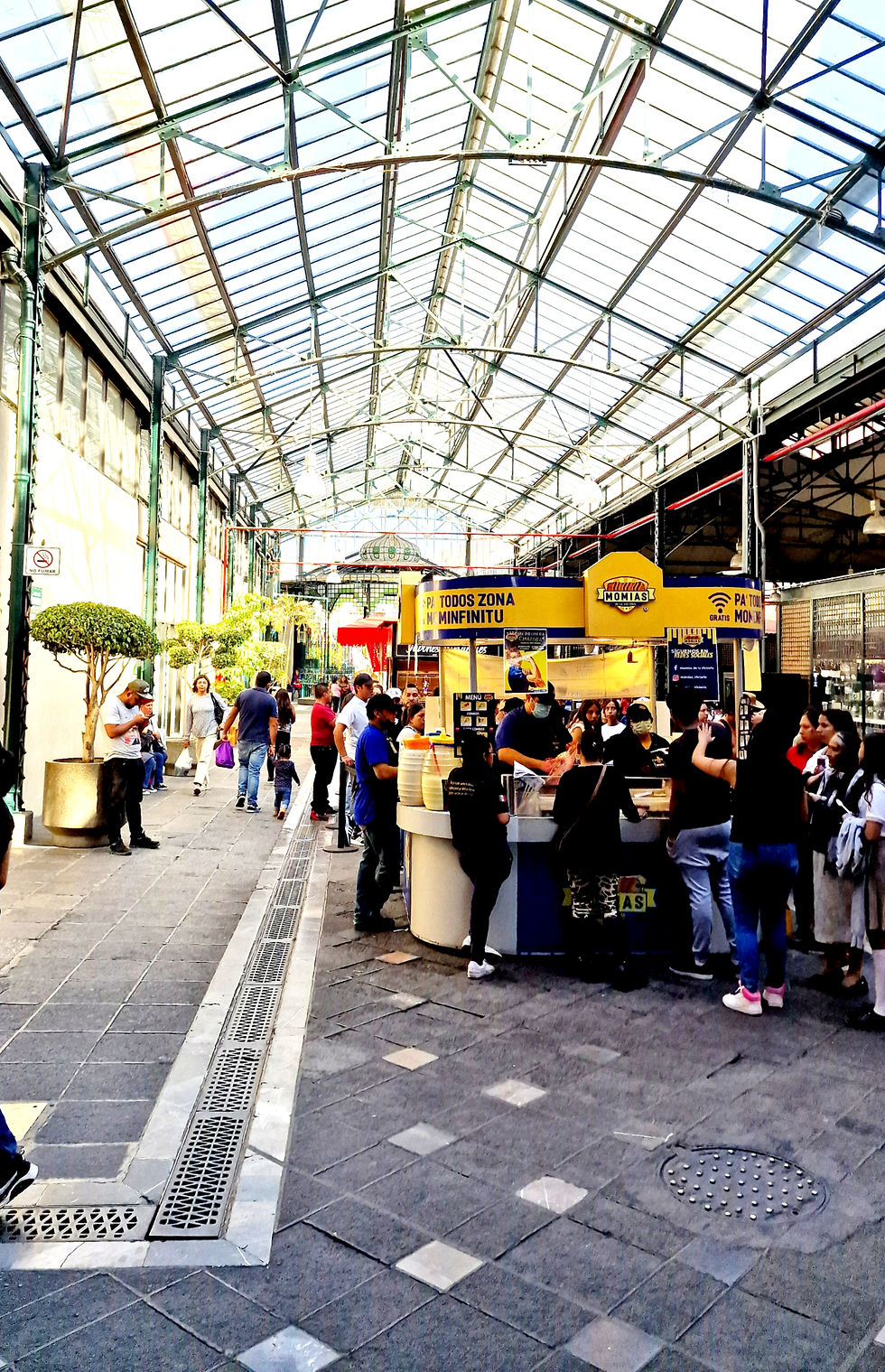
It was like a vast, magnificent, Parisian-style train station concourse—only without the trains; instead, it was packed with mountains of chili peppers. Market women haggling loudly drew in well-heeled customers, and the intense aroma of fresh cilantro captivated everyone. That was the Mercado de la Victoria, named after Guadalupe Victoria, Mexico’s first president.

It used to be the city's most important food market; today, it is a modern shopping center. Alongside cafés and clothing stores, you will also find stalls selling local handicrafts. The street food stalls are charming.

Which brings us back to the idea that the way to the heart is through the stomach. Here are a few examples:
Cemitas Poblanas are Puebla’s answer to the burger: a special sesame-seeded roll traditionally filled with breaded meat (milanesa), avocado, fresh quesillo cheese, onions, and the local herb pápalo.
Chalupas are small corn tortillas fried in lard, simply topped with red or green salsa and shredded pork or chicken, along with raw onions.
Tacos Árabes are a specialty brought to Puebla by Lebanese immigrants. Pork is grilled on a spit—döner or gyro style—thinly sliced, and served in a soft wheat flatbread (pan árabe) with a spicy chipotle salsa.
Soup Wisdom
I opt for a tiny, unassuming, and narrow restaurant offering a wide variety of soups—a place where apparently no tourists venture. I can’t make up my mind.

To my surprise, an older gentleman—possessing a positively youthful air, refined features, and a striking hat—calls out to me from the table opposite, insisting that I simply must try a *sopa poblana*.
We strike up a conversation. I ask him his age — "Quantos anos tiene?" — and he replies, "Casi ochenta anos!" (almost 80 years old), which elicits an appreciative "WOW!!!!" from me.
"How do you manage to look so young at that age?" I ask with genuine curiosity. "Well, stay away from doctors, lawyers, and psychologists, and invest the money in good wine and good food instead. Good sex doesn't hurt, either."
He raises his wine glass and toasts me. My Spanish is too poor, and to my surprise, he continues in English. He explains that he taught English for a long time and meets his friend here regularly for a meal; he then beckons the restaurant owner over to join us.
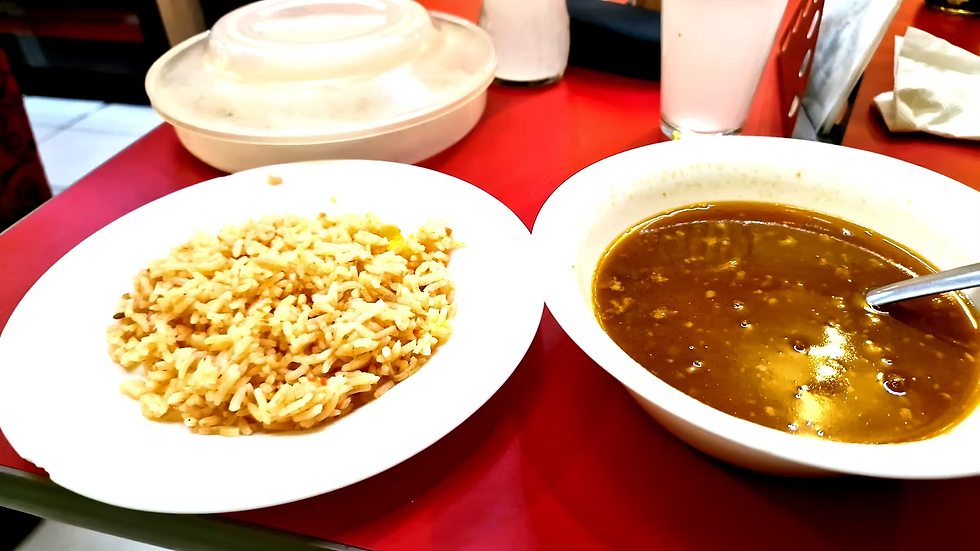
A short while later, three different, deliciously aromatic, freshly prepared soups, fresh bread, rice, and a beer are on my table. "You know, very few gringos ever stray here." And shortly after that, the waiter joins us and asks if I am enjoying Puebla.

When I want to pay for all the delicacies, the owner politely refuses and charges me for only one.
I pay the equivalent of just €5 for the soups, rice, beer, and bread. In the tourist shops, the beer alone costs that much.
Another one of those moments of happiness. No, not because of the money; it was the hospitality and the open, spontaneous, and unexpected conversations.
On the happiness that wants to be found

No, no, happiness here is no coincidence,
it is a quiet, gentle call:
Just look: It hides in alleyways,
in a smile,
in fleeting glances and
small signs.
Happiness runs ahead of you, yet waits patiently.
Slow down, then you will find it.
Not as a goal, but as a moment,
that tells you: Now and here.
bernd


Comments